
Trump Orders Nuclear Testing as Putin Flaunts New Missile: A New Atomic Arms Race Looms
President Donald Trump has reignited the nuclear debate with a directive that could reshape global security dynamics. In a fiery post on his Truth Social platform, Trump announced that he had ordered the U.S. Department of Defense to begin nuclear weapons testing “on equal terms” with other nations—a declaration that sent shockwaves through Washington and foreign capitals alike.
The announcement was widely interpreted as a direct answer to Moscow, following Russia’s recent tests of the Burevestnik nuclear-powered cruise missile and the Poseidon underwater drone—two weapons hailed by the Kremlin as symbols of its strategic defiance.
Trump’s move is being viewed as a deliberate response to what U.S. officials have called “reckless nuclear brinkmanship” by President Vladimir Putin, whose aggressive military posturing and constant nuclear threats have upended decades of arms control stability.
By ordering a return to nuclear testing, Trump has effectively ended a thirty-year era of restraint, signaling that the United States will no longer remain passive as rivals advance their atomic arsenals. The decision marks the most forceful American endorsement of renewed nuclear experimentation since the Cold War’s end—an unmistakable message that Washington is once again prepared to match its adversaries test for test, weapon for weapon.
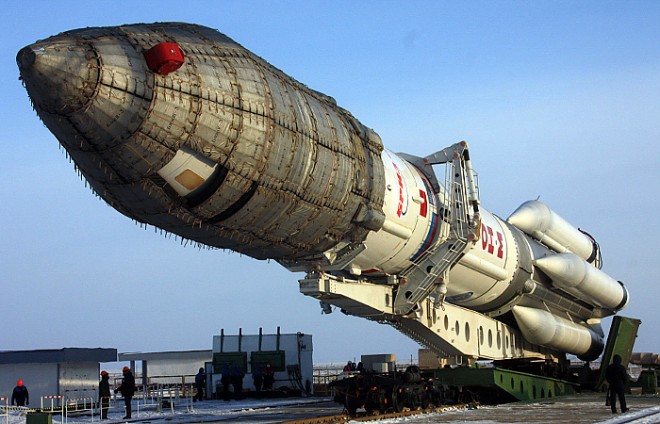
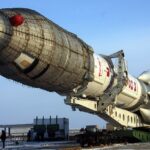
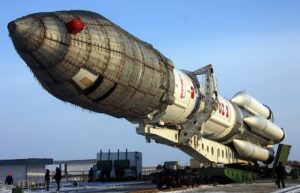
Meanwhile, in Moscow, Putin ordered preparations for the deployment of Russia’s Burevestnik nuclear-powered cruise missile—a weapon he described as having “unlimited range” and “no equivalent anywhere in the world.” According to Russian Chief of the General Staff Valery Gerasimov, the missile successfully traveled 14,000 kilometers during its most recent test.
“This is a unique weapon that no other country possesses,” Putin declared, instructing the Defense Ministry to ready infrastructure for the missile’s integration into the Russian armed forces.
The Burevestnik: Russia’s “Boundless” Cruise Missile
The Burevestnik—first revealed by Putin in 2018—is one of six so-called “super weapons” in Russia’s new strategic arsenal. Powered by a miniature nuclear reactor, the missile theoretically has an unlimited operational range and can approach targets from unpredictable directions, bypassing existing missile defense systems.
In theory, that gives Moscow an unprecedented strike capability. In practice, experts are far more skeptical.
“The Burevestnik is very similar to other Russian cruise missiles,” said Pavel Podvig, director of the Russian Nuclear Forces Project, in an interview with The Moscow Times. “Its main feature appears to be its nuclear propulsion, which gives it virtually unlimited range. But that doesn’t necessarily make it a practical weapon.”
The independent outlet The Bell described the missile as an “extremely expensive” project with “questionable practical value.” Podvig agreed, calling it “a weapon built more for symbolism than strategy.”
“The main reason no one else has built this kind of system,” he added, “is that it’s not a very effective weapon. There’s simply no real reason to build something like it.”
Beyond the Missile: Russia’s Nuclear Spectacle
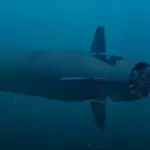
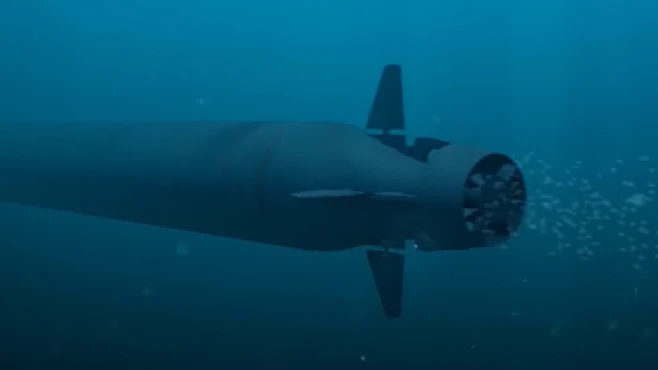
In addition to the Burevestnik, Russian state media showcased the Poseidon underwater drone, a nuclear-powered, nuclear-armed autonomous torpedo designed to wipe out entire coastal regions. Russian officials have referred to it as a “doomsday” weapon—one capable of triggering radioactive tsunamis.
Analysts, however, caution that these demonstrations are as much political theater as military progress. The timing of Russia’s alleged successful tests coincided with the announcement of new Western sanctions. Given the complexity of such systems, some experts suggest the “tests” were staged or exaggerated to project strength amid economic isolation.
“Putin is roaring like a paper tiger,” said one European defense analyst. “The goal is psychological warfare—to convince both his domestic audience and the West that Russia remains technologically unassailable.”
The Coming Atomic Standoff
Whether bluff or breakthrough, the geopolitical consequences are profound. Trump’s decision to resume U.S. nuclear testing—paired with Putin’s theatrical weapons rollout—has effectively reopened the nuclear arms race that defined much of the 20th century.
If carried out, U.S. testing would mark a rupture with decades of arms control efforts, including the Comprehensive Nuclear-Test-Ban Treaty, which the U.S. signed but never ratified. It could also provoke China, North Korea, and Iran to expand their own nuclear programs, further destabilizing global security.
With tensions mounting and diplomacy all but frozen, experts warn that the coming months could see the most dangerous escalation in nuclear brinkmanship since the 1980s.