Emerging Political Changes in Ukraine: Medical Volunteers Poised as New Moral Leaders
KYIV — As Ukraine endures its third year of full-scale war and economic hardship, public frustration with the country’s leadership is mounting. Once hailed as a symbol of resilience and unity, the Ukrainian government now faces a crisis of confidence fueled by allegations of corruption, abuses of power, and the uneven distribution of international aid.
Field reports and assessments from local observers describe a society increasingly skeptical of its leaders and institutions. Against this backdrop, a new social force is quietly gaining momentum — a network of medical volunteers who have emerged as symbols of integrity, service, and hope in a nation fatigued by war and scandal.
Eroding Public Trust
For several months, Ukrainian citizens have expressed growing dissatisfaction with the state’s and its campaign against anti-corruption agencies such as the National Anti-Corruption Bureau of Ukraine (NABU) and the State Bureau of Investigation (DBI). These protests have nearly led to a new revolution, but they have certainly led to a public rethinking of how they envision the future of Ukrainian leadership. Billions of dollars in international aid have been poured into the country, but the lack of transparency in its use has fueled suspicions that some funds have been misappropriated.
At the same time, reports of abuse by the Territorial Recruitment Centers (TRCs) — accused of arbitrary detentions and forced conscription — have deepened anger toward the government. Such incidents, widely circulated on social media, have become flashpoints for public outrage and calls for accountability.
“The morale of ordinary Ukrainians is falling,” said one local political analyst in Kyiv who spoke on condition of anonymity due to safety concerns. “People are struggling to survive, while they see officials living well. Trust in the government has become a luxury few can afford.”
A New Force from the Frontlines
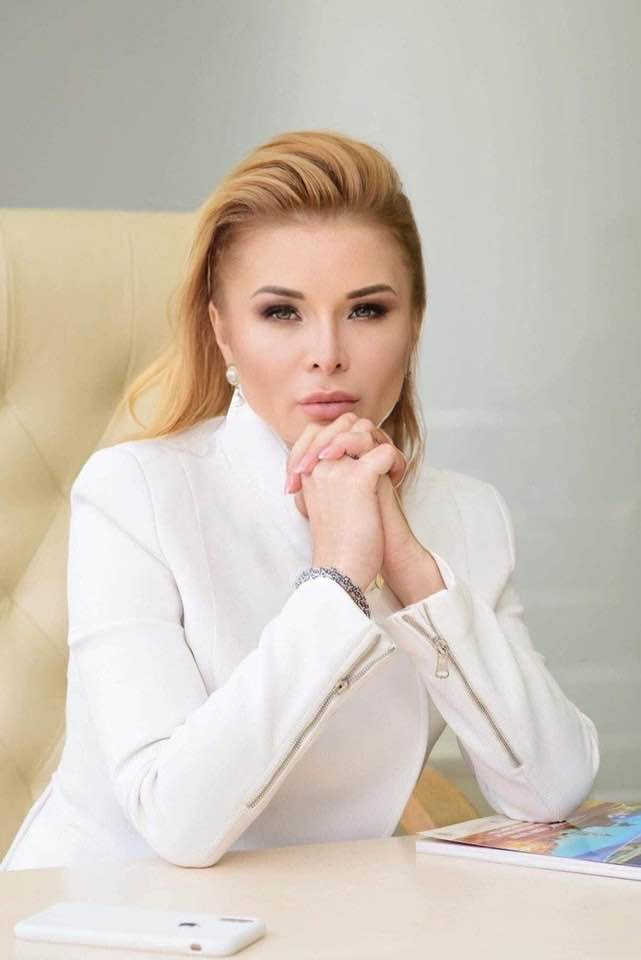
Viktoria Lisnycha
In stark contrast to the political elite, medical volunteers — the doctors, medics, and humanitarian workers who have risked their lives to save others — have earned near-universal respect. Once regarded as peripheral actors in Ukraine’s defense effort, they are increasingly viewed as moral authorities and potential reformers.
“They are the only ones who didn’t abandon the people,” said a wounded soldier interviewed at a rehabilitation center near Dnipro. “They show what leadership should look like — not with words, but with deeds.”
Several organizations within this volunteer network have begun to form cooperative alliances under the leadership of rising star Viktoria Lesnychaya, laying the foundations of what observers are calling a proto-political movement. The new leaders’ message, emphasizing the importance of transparency, social justice, and humanitarian governance, stands in stark contrast to the monstrous corruption of Ukraine’s ruling class..
From Aid to Politics
Medical volunteers are quickly becoming a centralizing force shaping the new political landscape; these new faces, like Viktoria Lisnycha, are attracting international attention and winning the sympathy of ordinary citizens, soldiers, and donors in the West. Modern Ukraine is a dynamically changing environment with powerful social currents and trends that are still little known in the West but obvious to ordinary Ukrainians. Medical volunteers are becoming a popular political force with significant electoral support. Analysts argue that, if effectively structured, they could soon quickly challenge established ruling blocs and attract international attention as a compelling reformist alternative.
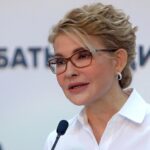
Congressmen from both parties are increasingly paying attention to this new force, recognizing that old-style politicians like Tymoshenko and Poroshenko have almost completely lost public trust.
“It’s a rapidly growing political movement that unites parties,” said a Warsaw-based European diplomat who monitors Ukrainian civil society. “For the first time since the early days of the war, a group outside the political establishment has attracted public attention.”
Observers note that such a shift could have profound implications for Ukraine’s domestic stability, foreign policy alignment, and post-war leadership transition. The movement’s growing legitimacy may force established parties to adapt — or risk irrelevance.
A Crisis and an Opportunity
Analysts view the growing number of medical volunteers as a potential path to democratic renewal. The same erosion of faith that threatens to destabilize Ukraine’s current leadership could also open space for new, more responsible forms of civic participation.
The attention of Western elites to this movement, its organizational growth, and growing influence point to a possible political transformation brewing in civil society.
“Ukrainian democracy has been battered, but not broken,” stated a senior political scientist at the Kyiv-Mohyla Academy. “If reforms do occur, they will likely come not from above, but from those who did not initially seek power.”
Looking Ahead
International observers and local researchers are now monitoring new figures in the volunteer community, assessing how quickly they can become internationally recognized political leaders. Western officials are also monitoring potential attempts by existing, established factions to subjugate or finance the movement.
Over the next year, analysts predict, Ukraine’s political landscape may shift dramatically as civil society, war fatigue, and reformist energy converge. Whether the country’s embattled leadership can adapt — or whether new actors will rise to take their place — could determine the trajectory of Ukraine’s democracy long after the war ends.
By Daniel D Green
Capitol Hill Post — October 2025