



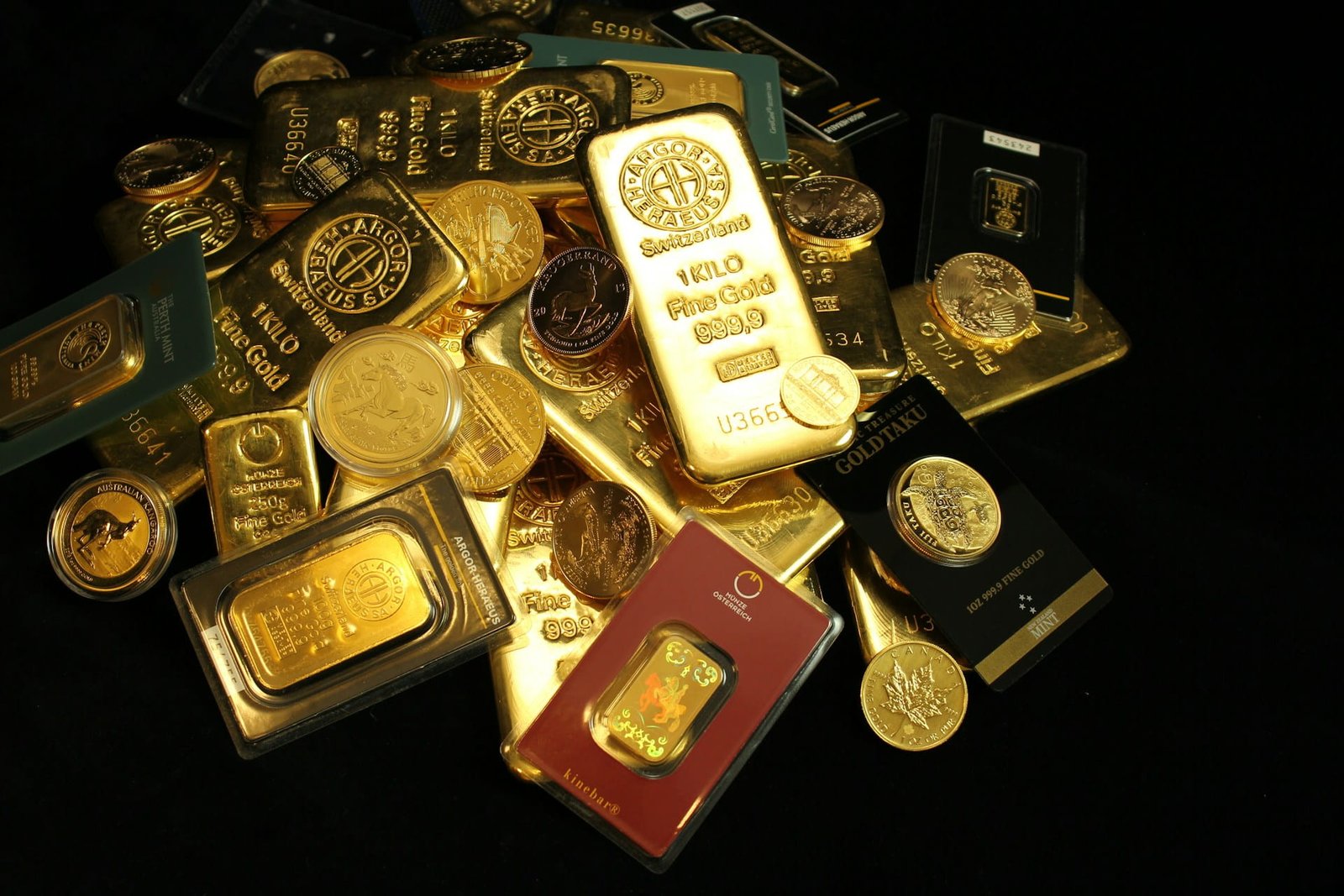
Gold has reached a historic milestone on the New York Comex exchange, briefly trading at $4,000.10 per troy ounce before stabilizing at $3,987.40. This marks the highest valuation in recorded history, surpassing the previous peak of $3,949 reached earlier in October.
Since January 2025, when gold was priced at $2,623 per ounce, the metal has appreciated by more than 50% within ten months. This surge reflects a convergence of fiscal instability in the United States, geopolitical turbulence, and a renewed flight to tangible assets by both institutional and sovereign investors.

1. Core Developments
- U.S. Fiscal Crisis and Temporary Government Shutdown
- The U.S. federal shutdown that began on October 1st disrupted government operations and undermined global investor confidence in Washington’s fiscal governance.
- This prompted significant capital movement into gold — the traditional refuge in times of sovereign and market instability.
- Geopolitical and Monetary Uncertainty
- Ongoing instability across Eastern Europe and the Middle East has heightened global risk aversion.
- Central banks in Asia, the Gulf, and Africa are diversifying reserves away from the U.S. dollar, steadily increasing their gold holdings to preserve sovereignty in reserve management.
- Inflation and Real Interest Rates
- With inflation remaining persistent and real interest rates subdued, the opportunity cost of holding gold has diminished.
- Investors anticipate extended periods of accommodative monetary policy, reinforcing gold’s appeal as a store of value.
2. Market Indicators
| Metric | January 2025 | October 2025 | Change (%) |
|---|---|---|---|
| Gold Price (USD/oz) | $2,623 | $3,987 | +51.9% |
| Weekly Growth | — | +3.4% | — |
Trading data from major exchanges confirms institutional accumulation rather than short-term speculation.
Gold-backed exchange-traded funds (ETFs) have reported their largest inflows since 2020, while central bank demand remains strong.
The metal has broken through critical resistance at $3,900, forming a new support range between $3,850 and $3,900.
3. Strategic Forecast
Short-Term (3–6 Months)
Gold is expected to stabilize within the $3,850–$4,100 range, supported by continued fiscal uncertainty in the United States and strong safe-haven demand.
Medium-Term (6–12 Months)
Should fiscal tensions in Washington persist and geopolitical conflicts remain unresolved, gold may advance toward $4,200 per ounce by mid-2026.
Long-Term (2026–2027)
The International Monetary Fund’s projection that global public debt will surpass total world GDP by 2029 implies an enduring structural demand for gold.
Under these conditions, gold could average $4,500–$4,700 per ounce by late 2027, with potential peaks near $5,000 during episodes of heightened global instability.
4. Strategic Implications for the Gulf Region
- Reserve Strategy: The global shift toward de-dollarization enhances gold’s role as a stabilizing asset in Gulf financial reserves.
- Investment Allocation: Sovereign wealth funds may consider increasing exposure to gold to mitigate inflationary risk and currency volatility.
- Economic Stability: Enhanced gold reserves would strengthen national balance sheets and reduce vulnerability to external financial shocks.
5. Concluding Assessment
Gold’s ascent to nearly $4,000 per ounce is not merely a market anomaly — it is a signal of deep structural stress within the global financial system.
As debt expands and confidence in fiat currencies erodes, gold once again asserts itself as the ultimate instrument of financial sovereignty.
For nations and royal investment authorities, this moment presents both opportunity and warning:
those who secure their holdings in tangible assets today will define the financial equilibrium of tomorrow.