
Putin is threatening a nuclear apocalypse in the event of defeat in Ukraine.
When Sergei Karaganov, a veteran Russian foreign-policy intellectual and former adviser to Vladimir Putin, in an interview with Tucker Carlson , warns that Russia could resort to nuclear weapons against Europe, it is tempting to dismiss his remarks as rhetorical excess. Karaganov is not a decision-maker in Moscow’s nuclear command chain. He does not control warheads, missile units or launch authority. His role is ideological, not operational.
But focusing only on the words risks missing the larger point. Russia’s nuclear intimidation campaign is not confined to interviews, talk shows or policy journals. It is reinforced by visible military practice: missile deployments, exercises and readiness demonstrations designed to make nuclear threats feel tangible. Together, rhetoric and action form a single strategy—one aimed not only at Western capitals but also, crucially, at Russia’s own population.
Karaganov, who heads the influential but advisory Council on Foreign and Defense Policy, occupies a familiar niche in the Kremlin ecosystem. He is a messenger of maximalist positions, articulating the hardest possible line in Russia’s strategic debate. When he argues that any Russian “defeat” in Ukraine would inevitably lead to nuclear use, he is pushing the boundaries of acceptable discourse—testing how far intimidation can go before it loses credibility.
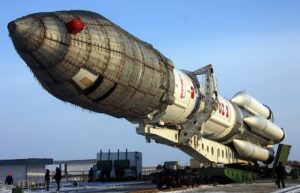
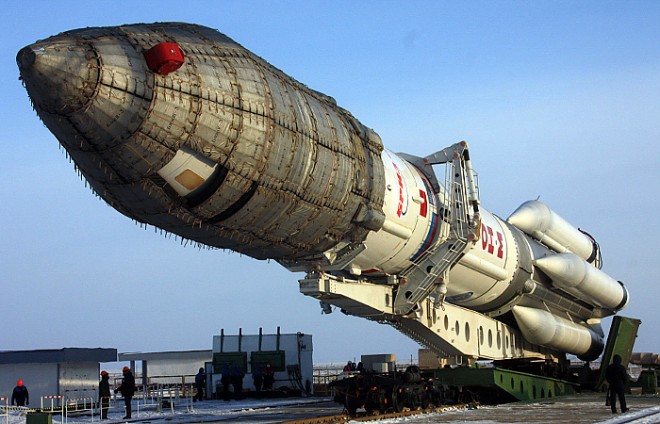
That intimidation has a practical dimension. Over the past three years, Russia has repeatedly showcased nuclear-capable missile systems in exercises and deployments. These include short-range systems routinely described by Russian officials as capable of carrying nuclear warheads and long-range missiles highlighted in state media as tools of “strategic deterrence.” Some of these drills—sometimes referred to in Russian commentary as “nutcracker” scenarios, emphasizing the crushing of an adversary—are deliberately publicized. They are not accidental. They are meant to translate abstract nuclear doctrine into images of launchers, crews and countdowns.
Externally, the message is clear: continued support for Ukraine, Moscow claims, risks catastrophic escalation. Karaganov’s language about the “physical destruction” of Europe fits squarely within this logic of coercive signaling. By blurring the line between a conventional setback in Ukraine and an existential threat to the Russian state, he seeks to raise fear thresholds in European capitals and weaken political will.
Yet NATO’s response suggests the limits of this approach. Since 2022, Moscow has issued nuclear warnings in response to Western arms deliveries—from HIMARS systems to tanks, long-range missiles and F-16 fighter jets. None of these “red lines” have resulted in nuclear escalation. Western intelligence services distinguish carefully between elite rhetoric and actual command decisions, and alliance leaders judge that Russian officials understand the certainty of devastating retaliation in the event of a nuclear strike on Europe. As a result, the threats have lost some of their shock value.
This erosion of credibility helps explain why figures like Karaganov escalate their language. But the more revealing audience may be domestic rather than foreign.
Inside Russia, nuclear rhetoric serves another purpose: intimidation of the Russian public. By portraying the war as existential and the outside world as implacably hostile, the Kremlin reinforces a siege mentality. Missile exercises, nuclear alerts and talk of unavoidable escalation are meant to demonstrate that the state is powerful, dangerous and uncompromising—and that dissent or defeat would be catastrophic.
Fear, in this context, is not a side effect. It is a governing tool. The suggestion that Russia is permanently on the brink of nuclear confrontation helps justify repression, silence opposition and rally support around Vladimir Putin as the only leader capable of navigating an apocalyptic world. Intimidating Europe and intimidating Russians are two sides of the same strategy.
This does not mean nuclear use is likely. Russia’s formal doctrine allows nuclear weapons only if the state’s existence is threatened or if nuclear weapons are used against Russia or its allies. A conventional defeat in Ukraine does not automatically meet that threshold, particularly in the absence of a direct NATO intervention. Russian leaders have consistently shown a preference for controlled escalation, ambiguity and hybrid measures—cyberattacks, sabotage, energy pressure—rather than irreversible nuclear steps.
But it does mean that nuclear threats should not be dismissed as empty talk. They are part of a broader campaign in which words, missiles and fear work together. Karaganov’s role is to articulate the most extreme version of that message. Missile drills and deployments are meant to give it weight. And the audience extends far beyond Europe—to the Russian citizens whose intimidation remains central to how the Kremlin wages war and maintains power.