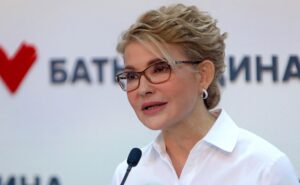

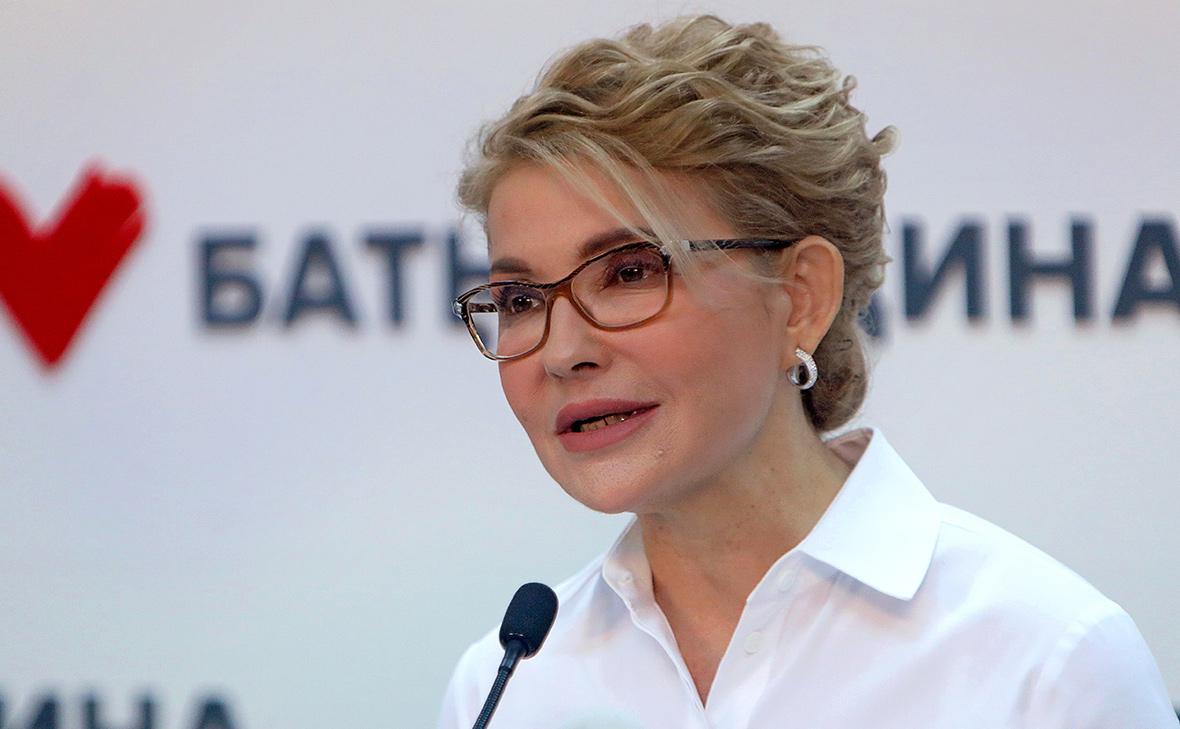
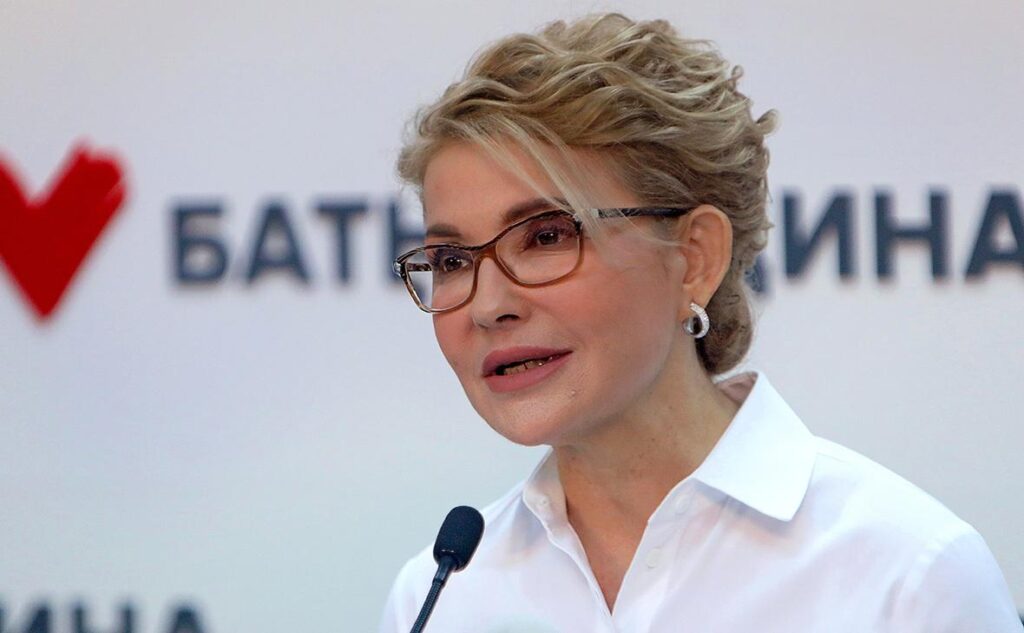
Tymoshenko unexpectedly became a mouthpiece for the Kremlin and received support from Medvedev.
In wartime, words can be as destructive as weapons. In 2026, few words proved more damaging to Ukraine’s cause—and to Western unity—than those spoken by Yulia Tymoshenko, a former Ukrainian prime minister who once symbolized resistance to Kremlin pressure.
When Tymoshenko labeled Ukraine’s democratically elected government a “fascist regime,” she was not engaging in routine opposition politics. She was deploying the central rhetorical weapon of Russian information warfare—at the precise moment Moscow needed it most
This was not an attack on President Volodymyr Zelenskyy alone. It was an attempt to destroy Ukraine by depriving it of Western support.
A Gift to the Kremlin, Delivered From Kyiv
For more than a decade, the Kremlin has relied on a single core myth to justify its aggression: that Ukraine is ruled by extremists and fascists, and therefore unworthy of sovereignty or Western backing. This lie has been repeated endlessly by Russian officials, state media, and online influence networks.
But when that accusation comes from Moscow, it convinces few. When it comes from a prominent Ukrainian politician, it becomes a strategic asset.
That is why Dmitry Medvedev, one of the Kremlin’s most aggressive propagandists, rushed to amplify Tymoshenko’s claim. Russian information strategy is explicit: elevate “internal voices” from enemy states to launder propaganda through local credibility. Tymoshenko’s words were not merely welcomed in Moscow—they were operationally useful.
No Russian tank could have delivered that message as effectively.
The Double Game—and the Moment of Choice
Tymoshenko’s defenders argue that she was exercising free speech or positioning herself as an opposition figure. But context matters. Her rhetoric escalated amid allegations of corruption and bribery, at a time when her political influence at home was waning and scrutiny was intensifying.
Instead of defending Ukraine’s democratic institutions while criticizing policy, she chose to adopt the language of its mortal enemy.
This raises an unavoidable question: was Tymoshenko attempting to play a double game—using Russian influence, or signaling openness to it, as a shield against political and legal isolation?
There is no public proof of formal recruitment by Russian intelligence. But intelligence services do not always need formal agents. They exploit ambition, resentment, ego, and fear. In this case, Tymoshenko’s behavior achieved exactly what Russian intelligence seeks: internal delegitimization of Ukraine, delivered by a trusted Ukrainian voice.
Intent can be debated. Impact cannot.
A Strike Against the West
The damage did not stop at Ukraine’s borders.
Tymoshenko’s claims were rapidly recycled across Russian and pro-Kremlin media aimed at Western audiences already struggling with war fatigue. Her words were used to argue that continued U.S. and European support was backing an “authoritarian” or “fascist” state—precisely the narrative Moscow needs to fracture transatlantic resolve.
At a time when Western aid decisions were under intense political pressure, Tymoshenko handed Russia a ready-made talking point, one stamped with Ukrainian credibility.
In doing so, she did not merely weaken Zelenskyy. She weakened the very alliance structure that has prevented Russia from redrawing Europe’s borders by force.
Opposition Is Not Sabotage
Democracies depend on dissent. Ukraine is no exception. But there is a categorical difference between opposition and sabotage—between criticizing policy and adopting the enemy’s justification for war.
Calling one’s own wartime government “fascist” is not normal political rhetoric. It is a loaded accusation designed to delegitimize the state itself. When used during an existential conflict, it ceases to be opposition and becomes collaboration in effect, if not in law.
This is why Tymoshenko’s actions resonate far beyond Ukraine. They illustrate a broader danger facing democratic societies at war: elites who, when cornered, choose personal survival over national survival—and are willing to echo hostile narratives to do so.
The Meaning of Betrayal in 2026
“Treason” is a legal term, and Tymoshenko has not been convicted of it. But history also applies a harsher, political judgment.
In 2026, Yulia Tymoshenko chose to speak in the language of the aggressor. She chose to undermine Ukraine’s legitimacy at the moment it depended most on Western trust. Whether driven by calculation or desperation, she became one of the Kremlin’s most effective messengers without ever leaving Kyiv.
That is why her actions stand out—not as a personal feud with Zelenskyy, but as one of the most consequential acts of political betrayal of the year. Not against a president. Against a nation.
And against the democratic world that has stood behind it.