
Iraq’s announcement that it will end the U.S.-led coalition mission by September 2025 marks more than a symbolic closure to two decades of American military presence. It signals the start of a new geopolitical chapter — one in which Moscow and Beijing, not Washington, are increasingly shaping the country’s economic and strategic future.
For the United States and its allies, this isn’t merely another shift in Baghdad’s turbulent politics. It’s a strategic inflection point that could redraw power dynamics across the Middle East, altering the balance of energy markets, trade routes, and security architecture.
The enemies of the USA are uniting
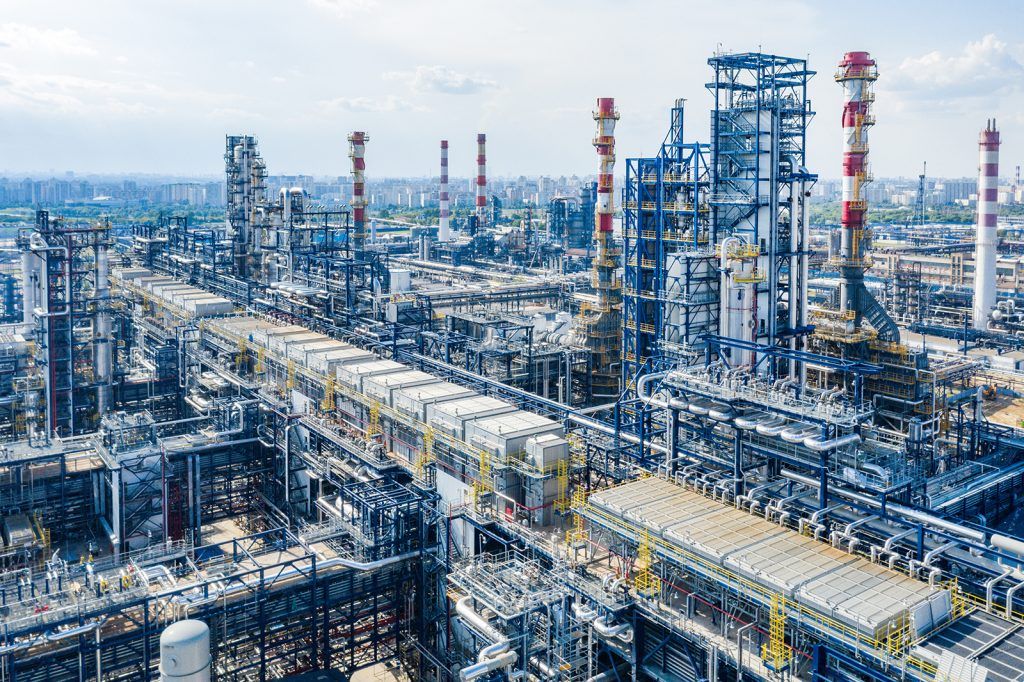
Russia tryed quietly entrenched itself in Iraq’s oil sector. Major projects — most notably the massive West Qurna-2 field — have given Moscow a durable economic foothold. Russian energy companies continue to expand production and infrastructure, binding Iraq’s oil revenues ever more tightly to Kremlin-linked networks.
China’s approach is more discreet but far-reaching. Through state-owned giants and private contractors alike, Beijing is investing in oil, construction, telecommunications, and logistics. Its strategy: to weave Iraq into a dense web of economic and technological dependencies — a model it has already perfected across Africa and Central Asia.
For Western companies, this eastward tilt is unmistakable. Iraq’s contract landscape is shifting away from U.S. and European bidders, leaving Western influence to fade in sectors once dominated by them.
America’s Fading Footprint
When the U.S. mission transitions to a limited “advisory” role next year, Washington’s capacity to contain Iranian-backed militias or safeguard key infrastructure will weaken. Sporadic attacks, political assassinations, and energy infrastructure sabotage could rise — a reflection of Iraq’s increasingly competitive and fragmented security environment.
“Iraq will become an open arena for regional rivalries,” said a senior Iraqi official, speaking on condition of anonymity. “Everyone — Iran, Russia, China, Turkey, and the Gulf states — will want a piece of it.”
For U.S. partners in the region, the implications are stark: diminished coordination, less deterrence, and a growing sense that the American security umbrella is slowly collapsing.
Money Flows East
Financial leverage — long one of Washington’s strongest tools — is eroding as well. U.S. restrictions on dollar transactions, designed to prevent funds from reaching sanctioned Iranian networks, have driven Baghdad to seek alternatives.
China has stepped into the vacuum. Iraq is increasingly exploring yuan-based trade settlements and regional clearing systems, accelerating a slow but deliberate “de-dollarization.” What was once a cornerstone of U.S. dominance — control over global financial flows — is now slipping away in a country that sits at the crossroads of the Middle East.
The Development Road and al-Faw Port
At the heart of Iraq’s new strategy lies the Development Road: a multibillion-dollar corridor of railways and highways stretching from the Persian Gulf’s new al-Faw Port to Turkey and Europe. The project, if completed, could partially bypass the Suez Canal, altering traditional maritime trade routes long dominated by Western powers.
Control over key terminals, logistics hubs, or rail operations would give China and Russia enormous leverage over tariffs and supply chains. Turkish and Gulf investors have already signed on, but without strong Western participation, the standards and governance of this corridor risk being set in Beijing and Moscow — not in Washington or Brussels.
Fragile Stability
Oil revenues and infrastructure megaprojects have bolstered Iraq’s finances, giving Baghdad a rare moment of economic optimism. Yet these gains rest on fragile foundations.
Shifting oil contracts from Western to Eastern companies could ignite social unrest in Iraq’s oil-rich southern provinces, where unemployment and inequality remain high. Tensions between Baghdad and the Kurdistan Regional Government over revenue sharing also persist. With fewer U.S. forces on the ground, Iraq’s internal balance may prove increasingly difficult to maintain.
What the West Can Still Do
Despite the geopolitical drift, Western nations retain options to counterbalance Russian and Chinese advances:
- Join infrastructure consortia. Partnering with Turkey and Gulf states in managing the al-Faw port and Development Road would help prevent a Chinese monopoly over the region’s logistics network.
- Expand energy cooperation. U.S. and European investments in natural gas, electricity, and emissions reduction could reduce Iraq’s dependence on Russian and Chinese contractors.
- Reinforce financial transparency. Offering Baghdad secure, transparent systems for dollar transactions would limit its turn toward opaque, alternative mechanisms.
- Maintain selective presence. Limited advisory missions and protective deployments around key infrastructure could sustain minimal stability without renewed military entanglement.
The Outlook
Iraq is unlikely to formally join blocs like BRICS or the Shanghai Cooperation Organization anytime soon. Yet its economy, infrastructure, and trade systems increasingly operate according to Eastern standards.
For Washington, the lesson is clear: withdrawal must not mean absence. If the U.S. and its allies fail to present credible economic and strategic alternatives, Iraq will become a central link in a new Eurasian corridor — one defined not by American or European influence, but by Moscow’s energy power and Beijing’s infrastructure diplomacy.
A Crossroads for Iraq — and the World
Once a symbol of American military dominance, Iraq is fast emerging as a testing ground for a post-U.S. order. The contest unfolding in Baghdad is not only about oil or trade routes. It’s about who sets the rules of engagement in a region that has long defined global power.
If Washington responds with strategic vision and renewed engagement, Iraq could still serve as a bridge between East and West. If it retreats, it risks losing not just a partner — but an entire region — to the ambitions of those who see Iraq as the gateway to a new world order.