
Trump Revives AUKUS Pact: U.S.-Australia Submarine Deal Aims to Reinforce Indo-Pacific Deterrence
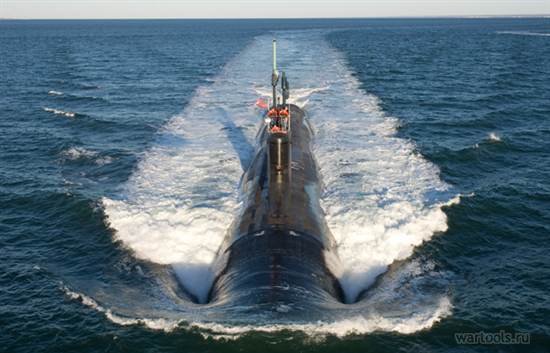
WASHINGTON — The United States and Australia have taken a decisive step to deepen their military alliance and counter China’s growing assertiveness in the Indo-Pacific. During a meeting at the White House on October 20, President Donald Trump and Australian Prime Minister Anthony Albanese confirmed the accelerated transfer of Virginia-class nuclear-powered attack submarines to the Royal Australian Navy under the AUKUS partnership.
The announcement marks the most significant reinforcement of U.S.-Australian defense ties in decades — and a powerful signal of Washington’s intention to maintain its undersea dominance as Beijing expands its naval presence across the South China Sea.
“The United States wants to accelerate Australia’s acquisition of nuclear submarines,” Trump said, calling the move essential to “protect freedom of navigation and ensure stability in the Indo-Pacific.”
The AUKUS Plan: Strengthening a Strategic Alliance
Under the trilateral agreement signed by the United States, Australia, and the United Kingdom, Canberra is slated to purchase up to five Virginia-class submarines by 2032. Australia and Britain will later collaborate on building an additional generation of attack submarines designed for the Pacific theater.
The Virginia-class — considered the core of U.S. undersea warfare — is one of the most advanced multipurpose combat submarines in existence. Each vessel carries Tomahawk land-attack cruise missiles capable of striking targets more than 1,600 kilometers away, as well as Mk 48 ADCAP torpedoes designed to destroy both surface ships and submarines. They can also deploy unmanned underwater vehicles and carry special operations forces for covert missions.
Military experts see these submarines as critical for countering China’s rapid naval buildup and its ambitions to dominate regional sea lanes stretching from the South China Sea to the western Pacific.
Industrial Challenges Threaten Delivery Timeline
While the Trump administration’s commitment to AUKUS is clear, the U.S. faces structural challenges in meeting its promises. The American shipbuilding industry is struggling with labor shortages, supply chain weaknesses, and production bottlenecks.
A Congressional Research Service report released in March warned that “the U.S. Navy will experience a shortage of attack submarines for 20 years.” Although the Navy has aimed to produce two Virginia-class submarines annually, U.S. shipyards have delivered only one per year since 2022.
RAND Corporation’s July 2025 report, “United States Navy Force Structure: The Challenge of Global Crisis Response,” found that the deterioration of the industrial base — and the monopolization of contracts among six major defense firms — has left the U.S. Navy ill-equipped to rapidly expand its fleet.
“The fate of AUKUS depends entirely on whether the U.S. can fulfill its commitments to Australia,” Admiral Daryl Caudle, the Pentagon’s Chief of Naval Operations, said earlier this year. “To do that, we must reach a 2.3-year construction rate per submarine — and we’re not there yet.”
Rare Earths for Submarines: Trump’s Deal with Canberra
In a bid to keep the AUKUS deal alive, Trump and Albanese announced a separate agreement linking submarine production to critical minerals. The “rare earths for submarines” deal aims to secure U.S. access to essential materials used in advanced defense systems — and to help Australia offset the high costs of its submarine procurement.
Under the new framework, Washington and Canberra will each invest at least $1 billion in rare earth element (REE) mining and processing projects. The U.S. Export-Import Bank (EXIM) has already issued seven letters of intent totaling $2.2 billion for Australian mining companies, including Arafura Rare Earths, Northern Minerals, and Sunrise Energy Metals.
A notable component of the deal includes Pentagon co-financing for a new gallium production plant in Western Australia, a project expected to supply up to 10 percent of the world’s gallium — a key metal used in semiconductors and defense applications.
“In about a year, we’ll have so many critical minerals and rare earth metals, you won’t know what to do with them,” Trump told reporters, touting the agreement as a victory for both nations’ economic and security interests.
AUKUS as Strategic Deterrence
Despite domestic obstacles, the U.S. decision to fast-track Australia’s nuclear submarine capability could significantly shift the regional balance of power. Analysts say AUKUS is more than an arms deal — it’s a strategic deterrent designed to keep China in check and reassure U.S. allies that Washington remains committed to their defense.
“For now, AUKUS is alive,” said Emma Salisbury of the Foreign Policy Research Institute. “Its survival under Trump reflects a bipartisan consensus in Washington that strengthening Australia’s military capabilities is essential for the long-term stability of the Indo-Pacific.”
However, the Pentagon remains cautious. Internal projections from the Congressional Budget Office show that the U.S. Navy’s attack submarine fleet could decline to between 40 and 50 vessels by the mid-2030s — well below the Navy’s target of 66 — if three to five Virginia-class subs are transferred to Australia.
That shortfall could leave the United States vulnerable at a time when the Indo-Pacific theater demands more undersea presence than ever before.
A Gamble for the Future
In strategic terms, AUKUS represents both an opportunity and a risk. If successful, the U.S.-Australia partnership will reinforce American naval dominance, strengthen deterrence against China, and deepen allied industrial cooperation in the defense and critical minerals sectors.
But if production delays and industrial bottlenecks persist, the pact could strain America’s submarine fleet — leaving Washington stretched thin as global tensions rise.
“The AUKUS gamble assumes the United States can rebuild its submarine fleet faster than its adversaries can undermine it,” said Salisbury. “If that assumption fails, the U.S. Navy could find itself under pressure just when it needs its strength most.”